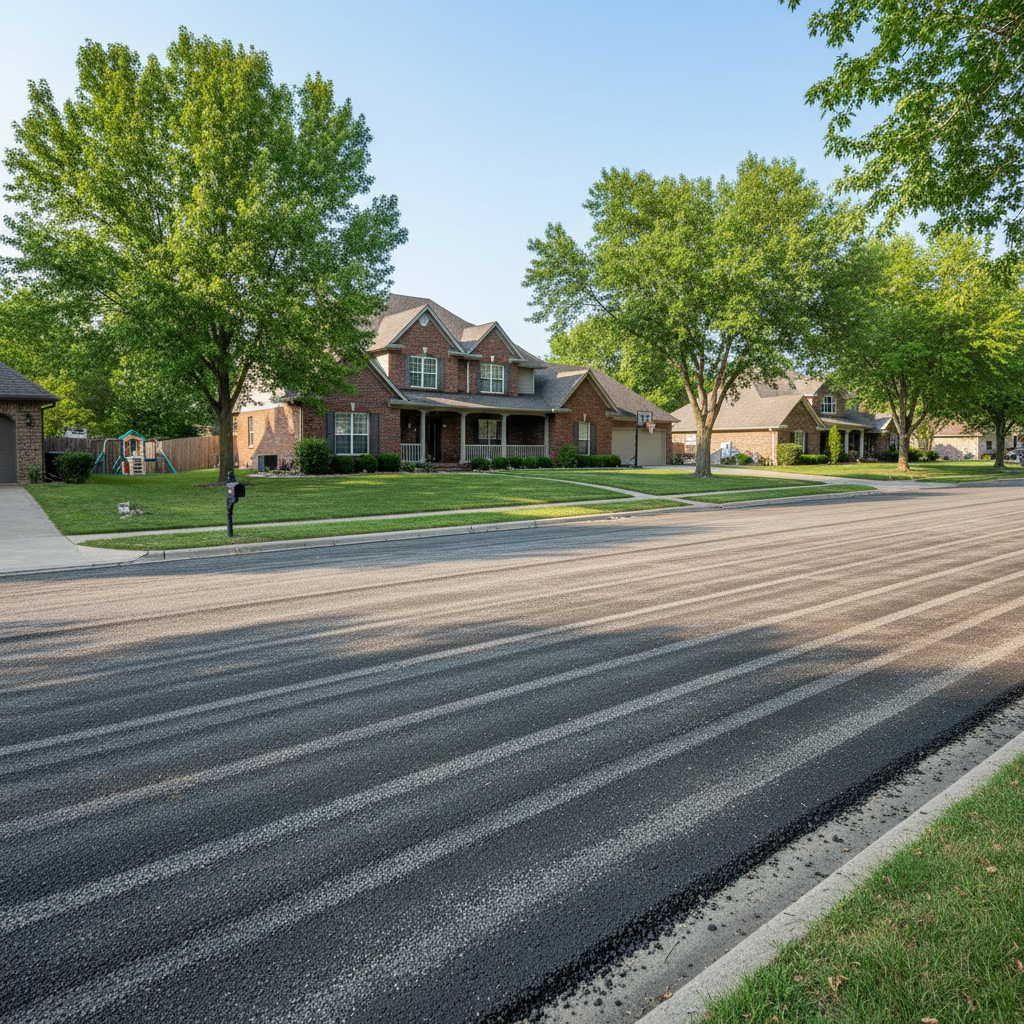
Got a cracked, crumbling asphalt driveway or parking lot that's seen better days? You're probably thinking about getting it repaved. Good idea. But before you just slap a new layer of asphalt down, let's talk about something called asphalt milling. It's a game-changer, especially here in Springfield, and it's something I recommend to a lot of my customers.
What Even Is Asphalt Milling?
Okay, so what is it? Simply put, milling is like giving your old asphalt surface a really deep shave. We use specialized machinery to grind off the top layer of existing asphalt – usually anywhere from a couple of inches to the full depth, depending on what we're trying to achieve. It's not just ripping everything out; it's a precise removal process.
The material we remove? That's called reclaimed asphalt pavement, or RAP. And here's the cool part: RAP isn't waste. We can recycle it. It gets crushed and reused in new asphalt mixes, which is great for the environment and helps keep costs down. It's a win-win.
Why Milling Makes Sense for Springfield Properties
You might be thinking, "Why bother? Can't you just pave over the old stuff?" Sure, you can, but it's rarely the best solution, especially with the kind of weather we get around here. Our freeze-thaw cycles in the Ozarks are brutal on pavement. Paving over existing damage often just covers up the problems, leading to quicker deterioration of the new surface.
Here's why milling is a smarter move for our area:
- It addresses the root cause: If your old asphalt is failing because of a bad base, or because it's just too thick and unstable, milling lets us get down to a solid foundation. We can fix any sub-base issues before laying new asphalt, ensuring a much more stable and long-lasting surface.
- Maintains proper drainage: This is huge in Springfield. We get some serious downpours. Milling allows us to maintain or re-establish proper slopes and drainage patterns. If you just add more layers, you can raise the elevation of your driveway or parking lot, which can mess with water flow, create puddles, and even direct water towards your foundation. Nobody wants that.
- Keeps elevations consistent: Think about your garage door or the transition to your sidewalk. Adding layers of asphalt without milling means your new surface will be higher. This can create awkward lips, trip hazards, and even prevent garage doors from closing properly. Milling ensures your new surface is flush with existing structures.
- Cost-effective in the long run: While there's an upfront cost for milling, it often saves you money in the long run. You're getting a better, more durable product that won't need repairs or replacement as quickly. Plus, using recycled RAP can sometimes reduce material costs for the new asphalt mix.
Common Projects Where We Use Milling
I see milling come into play on all sorts of projects around Springfield. For instance, in older neighborhoods like Phelps Grove or Rountree, where driveways have been patched and repatched for decades, milling is essential. It lets us strip away all those inconsistent layers and start fresh, giving those charming homes a smooth, modern surface without raising the grade too much.
We also use it a lot for commercial parking lots. If you've got a busy lot, say, near Battlefield Road or Glenstone Avenue, that's seen heavy traffic and developed significant cracking or potholes, milling is the way to go. It allows us to remove the damaged top layers and prepare a uniform surface for a new, durable overlay that can handle the constant wear and tear.
Even for larger residential properties in areas like Highland Springs or Millwood, where folks want a really high-quality, long-lasting driveway, milling is often part of the plan. It’s about building it right from the ground up, or rather, from the ground down.
Why Local Expertise Matters for Milling
You wouldn't hire an out-of-towner to tell you about Springfield's best BBQ, right? Same goes for asphalt. Our local conditions are unique. We've got that clay soil that can shift, and as I mentioned, those wild temperature swings. Knowing how these factors affect pavement over time is crucial.
A contractor who's been working in Springfield for years, like us at Premium Asphalt Solutions, understands these nuances. We know when full-depth milling is necessary versus a shallower surface mill. We know how to assess the sub-base and what kind of aggregate will perform best with our local soil types. We've seen what works and what doesn't work in our specific environment.
Milling isn't just about operating a machine; it's about understanding the science of pavement and applying that knowledge to our local conditions. It ensures you're not just getting a new surface, but a truly rebuilt, long-lasting asphalt solution tailored for Springfield.
So, if your asphalt is looking rough, don't just think about paving over it. Ask about milling. It's often the smartest first step to a driveway or parking lot that will serve you well for years to come.