Alright, let's talk asphalt. If you own a business or manage a commercial property right here in Springfield, you've probably stared at your parking lot or access road and thought, "It's time." But what does "time" actually mean for your pavement? When you want a fresh, tough asphalt surface, you've really got two main choices: either a brand new installation on a prepped sub-base, or we completely tear out the old stuff and then replace it.
Now, these two aren't the same, and picking the right one can save you a ton of grief and money later on. I've seen plenty of folks make the wrong call, and it usually ends up costing them more in the long run. So, let's dig in.
New Asphalt Paving: Starting from Scratch
This is pretty much what it sounds like. We're talking about putting down asphalt where there wasn't any before, or maybe the existing surface (like gravel or just plain dirt) is getting a total facelift. Think about a brand new development, expanding an existing lot, or converting a gravel drive to asphalt. For these projects, we build the whole thing from the ground up.
Cost: Generally, this will be your most expensive option upfront. Why? Because we're doing all the heavy lifting from the start. We have to excavate, grade the site just right, bring in and compact a really solid aggregate base (like crushed rock), and *then* lay down the asphalt layers. It's a lot of material and labor, you know?
Durability: This is where new installations really shine. When you've got a properly prepared sub-base and a thick, well-compacted aggregate layer, your asphalt gets the best possible foundation. That means it's built to last, handling heavy traffic and those crazy freeze-thaw cycles we get here in Southwest Missouri much better. You're looking at 20+ years easily with good maintenance.
Maintenance: Initially, maintenance is pretty low. You'll want to sealcoat it within the first year to protect that fresh surface, and then every 2-3 years after that. Keep up with crack sealing as small cracks pop up, and you're golden.
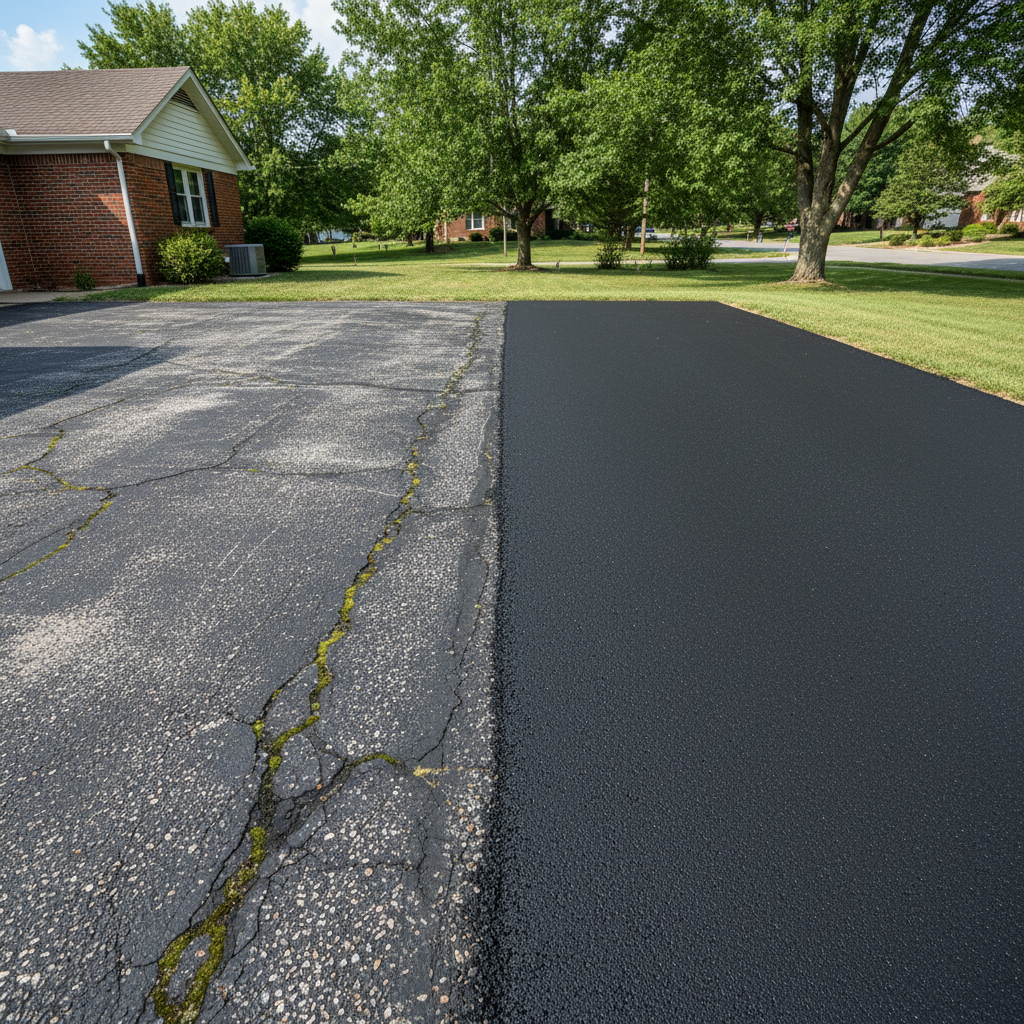
Appearance: Pristine. A brand new, jet-black surface with crisp lines. It looks professional and makes a fantastic first impression for any business.
Total Asphalt Replacement: Out with the Old, In with the New
This option comes into play when your existing asphalt is just completely shot. We're talking widespread alligator cracking, deep potholes, severe rutting, drainage issues, or the surface is simply crumbling apart. An overlay (which is just putting new asphalt on top of old) won't fix the underlying problems in these cases. You've got to rip it all out.
Cost: This is also a big investment, often pretty similar to a new installation. The extra cost here is for demolishing and removing the old asphalt. We have to break it up, haul it away, and then we're essentially starting over with the base and new asphalt layers, just like a new installation.
Durability: Just like a new installation, a full replacement, when done right, gives you maximum durability. We're addressing any sub-base issues that caused the old pavement to fail, making sure there's a strong foundation for the new asphalt. You're getting that same 20+ year lifespan.
Maintenance: Same as a new installation. Start with a sealcoat early, and then regular sealcoating and crack sealing will keep it in top shape for decades.
Appearance: Again, you're getting that fresh, clean, professional look. It's a complete transformation from a failing, ugly lot to something that really boosts your property's curb appeal.
So, Which One Do You Need?
Honestly, for most commercial properties in Springfield dealing with a completely failed or non-existent surface, you'll likely be leaning towards either a new installation or a full replacement. The main difference is whether there's anything worth saving there now. If your current asphalt is beyond repair – meaning the base layers are compromised, not just the surface – then a full replacement is the only smart move. Trying to patch over major structural issues is like putting a band-aid on a broken leg; it just won't hold up, will it?
If you're expanding, building new, or converting a gravel lot, then a new installation is what you're after. The investment is substantial for both, but the payoff is a long-lasting, low-hassle surface that adds value and professionalism to your property.
We deal with a lot of clay soil around here, especially in areas like the south side of town. That kind of soil can expand and contract, making a strong, well-drained sub-base absolutely critical for any asphalt job, whether it's new or a replacement. Skimp on that, and you'll be calling us back a lot sooner than you'd like.
My advice? Don't guess. Get a professional opinion. We at Premium Asphalt Solutions can come out, assess your site, and tell you exactly what your pavement needs. We'll give you the straight talk on whether you need to build from scratch or tear it all out to get a lasting solution.