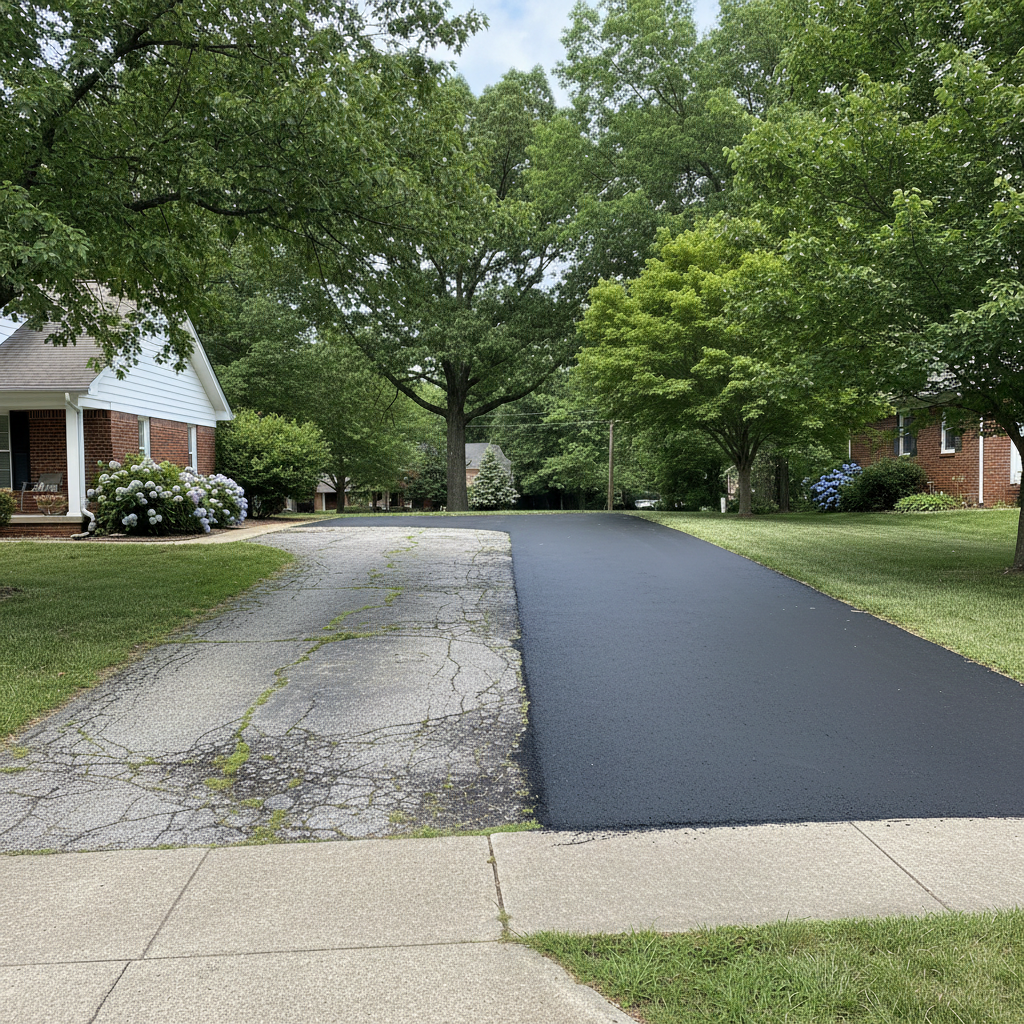
So, you're looking at putting in a new parking area, maybe for a larger home, a shared private drive, or even a small commercial spot on your property here in Springfield. You've got two main players in the game: asphalt and concrete. I get asked all the time which one's better, and honestly, it's not a one-size-fits-all answer. But I can tell you what I've seen work and what doesn't, especially with our crazy Missouri weather.
Initial Cost: Where Does Your Wallet Stand?
Let's talk money first, because that's usually the biggest factor for folks. Generally speaking, asphalt is almost always cheaper upfront. You're looking at a lower cost per square foot to get it installed. That's because the materials are less expensive and the installation process can be a bit quicker. If you've got a big area to cover, that difference can really add up.
Concrete, on the other hand, is a bigger investment right out of the gate. The materials cost more, and it takes more labor and specialized equipment to pour and finish it properly. So, if your budget is tight and you need a good-sized parking area, asphalt often wins the initial cost battle.
Durability and Lifespan: How Long Will It Last?
This is where things get interesting. A properly installed and maintained asphalt parking lot can last you 15-20 years, sometimes more. But that's the key: "properly maintained." Asphalt is flexible, which is good for our freeze-thaw cycles here in the Ozarks. It can handle a little ground movement without cracking like crazy. However, it needs regular sealcoating every few years to protect it from UV rays, water, and chemicals. If you skip that, it'll break down much faster.
Concrete is a tougher beast in some ways. It's rigid and can last 20-30 years, sometimes even longer, with less routine maintenance than asphalt. You don't need to sealcoat it every few years. But, because it's rigid, it's more prone to cracking if the ground shifts underneath it, or if it's not installed with proper expansion joints. Our clay soils around Springfield can be pretty active, expanding and contracting, which can be tough on concrete if it's not prepped right. Plus, if a concrete slab does crack or heave, repairs are usually more involved and expensive than patching asphalt.
Maintenance: What's Your Time Worth?
This is where the trade-offs really show up. With asphalt, you're looking at a schedule of sealcoating every 2-4 years, depending on traffic and sun exposure. You'll also need to keep an eye out for small cracks and get them filled quickly to prevent water damage. It's ongoing, proactive maintenance. Think of it like changing the oil in your car – you do it regularly to prevent bigger problems.
Concrete's maintenance is different. It's less frequent, but when something goes wrong, it can be a bigger headache. You'll want to clean it periodically to prevent staining and moss growth, especially in shaded areas. If a crack does form, you're often looking at cutting out and replacing a whole section, or more complex crack repair that doesn't always blend perfectly. It's more reactive maintenance, in my experience.
Appearance: What Look Are You Going For?
Aesthetically, they're pretty different. Asphalt gives you that classic dark, smooth, uniform look. It's great for contrast with landscaping and parking lot striping really pops on it. When it's freshly sealcoated, it looks sharp and clean.
Concrete has a lighter, brighter appearance. It can look very clean and modern. You can also get it stamped or colored to achieve different looks, though that adds to the cost. It reflects more light, which can be a plus in some situations. It really comes down to personal preference and the overall aesthetic of your property.
My Recommendation for Springfield Homeowners
Considering our specific conditions here in Springfield – the fluctuating temperatures, the ice and snow, and the often expansive clay soils – I generally lean towards asphalt for most residential parking lots or larger driveways. Here's why:
- Cost-Effectiveness: For the initial investment, you get a lot of bang for your buck.
- Flexibility: Asphalt handles our freeze-thaw cycles and shifting soils better than rigid concrete. It's less likely to suffer catastrophic cracking from ground movement.
- Repairability: If you get a pothole or a bad crack, asphalt is much easier and more affordable to patch and blend seamlessly. With Premium Asphalt Solutions, we can get those repairs done efficiently, extending the life of your lot.
Now, this isn't to say concrete is bad. If you've got a smaller area, a very stable sub-base, and you prefer the look and lower frequency of maintenance, concrete can be a great choice. But for larger parking areas where budget and long-term repair flexibility are key, asphalt usually comes out on top for homeowners in our neck of the woods. Just remember, no matter which you pick, proper installation and a good sub-base are absolutely crucial for longevity.