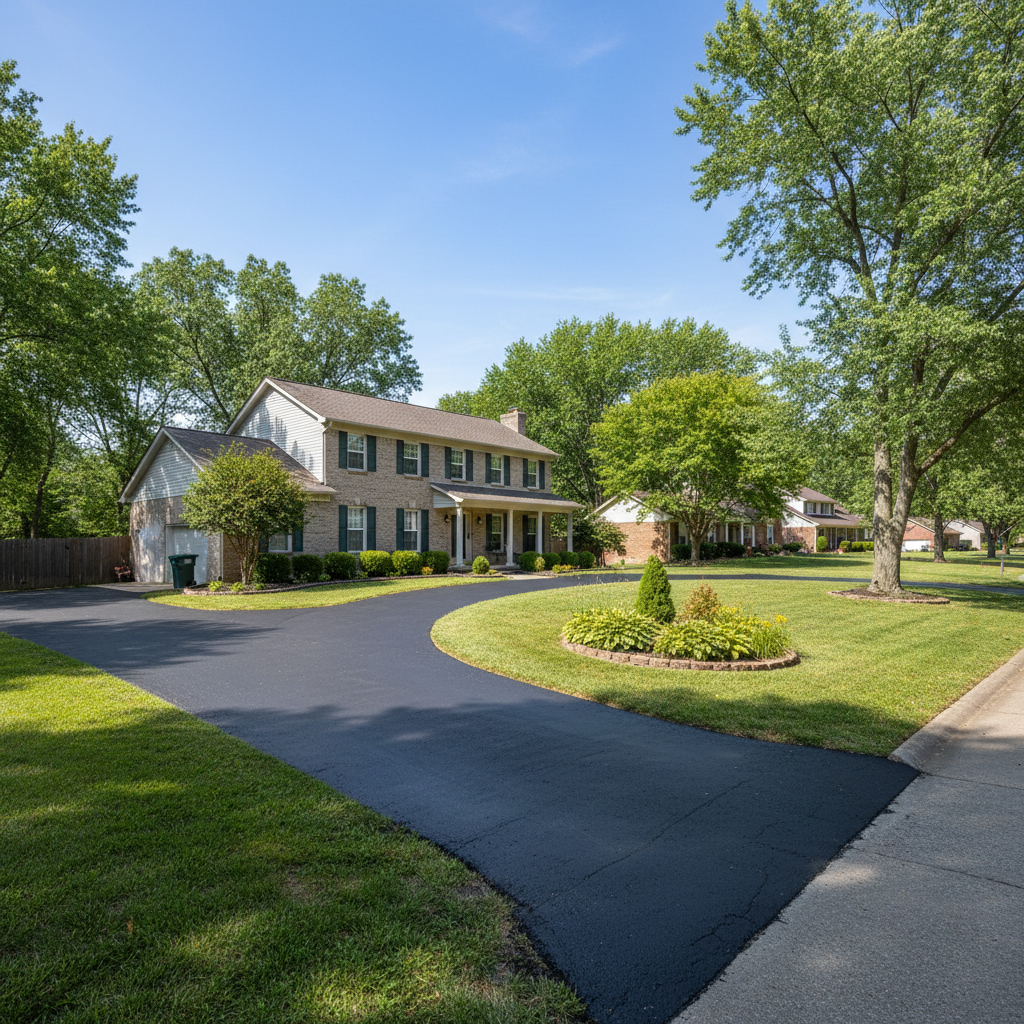
Alright, let's talk about slurry seal. You've probably seen it around town, maybe even wondered what it is. Essentially, it's a protective layer you put over existing asphalt. Think of it like a heavy-duty sunscreen and a fresh coat of paint for your driveway or parking lot. It's not a miracle cure for a completely busted up surface, but for asphalt that's still got good bones, it's a fantastic way to extend its life and make it look sharp.
What Even Is Slurry Seal?
So, what exactly are we talking about here? A slurry seal isn't just plain old sealcoat. It's a mixture of asphalt emulsion, fine aggregate (like sand), water, and some chemical additives. The aggregate is what really sets it apart from a standard sealcoat. That sand gives it a much more durable, wear-resistant surface. When it cures, it creates a new, smooth, black layer that fills in minor cracks and voids, protecting the underlying asphalt from the elements.
We use it a lot on residential driveways, especially in neighborhoods like those around Galloway Creek or even some older parts of Phelps where the asphalt might be showing its age but isn't completely falling apart. It’s also great for smaller parking lots, private roads, and even golf cart paths. It gives you a consistent, fresh look that really boosts curb appeal.
Why It Matters Here in Springfield, MO
Our weather here in Southwest Missouri is brutal on asphalt, isn't it? We get those scorching summers, then the freezing winters with ice and snow, and let's not forget the constant freeze-thaw cycles. That's a recipe for asphalt deterioration. Water seeps into tiny cracks, freezes, expands, and then boom – you've got potholes and bigger cracks. UV rays from the sun also break down the asphalt binder, making it brittle and faded.
A slurry seal acts as a barrier against all that. It seals off those small cracks, preventing water penetration. It protects against the sun's UV rays, keeping the asphalt from oxidizing and becoming brittle. This means less cracking, less pothole formation, and a much longer lifespan for your pavement. It's a preventative measure, and trust me, preventing problems is always cheaper than fixing them down the road.
It's All About the Prep Work
Now, here's where local expertise really comes into play. You can't just slap slurry seal down and expect it to work. The surface has to be clean, dry, and properly prepared. We're talking about sweeping, blowing, and sometimes even power washing to get rid of all the dirt, debris, and loose aggregate. Any significant cracks need to be filled first. If you've got oil spots, those need to be treated. If you skip these steps, the slurry won't adhere properly, and you'll be wasting your money.
We've seen it all, from driveways with poor drainage that stay wet for days after a rain, to surfaces covered in a thick layer of our clay-heavy soil. Understanding how these local conditions affect adhesion and drying times is crucial. You need someone who knows how our humidity affects cure times, or how to deal with the inevitable spring pollen that wants to settle everywhere.
When Is It the Right Choice?
Slurry seal is ideal for asphalt surfaces that are still in decent shape but are showing signs of aging. We're talking about:
- Faded, graying asphalt that's lost its rich black color.
- Surfaces with a lot of fine, hairline cracks (often called